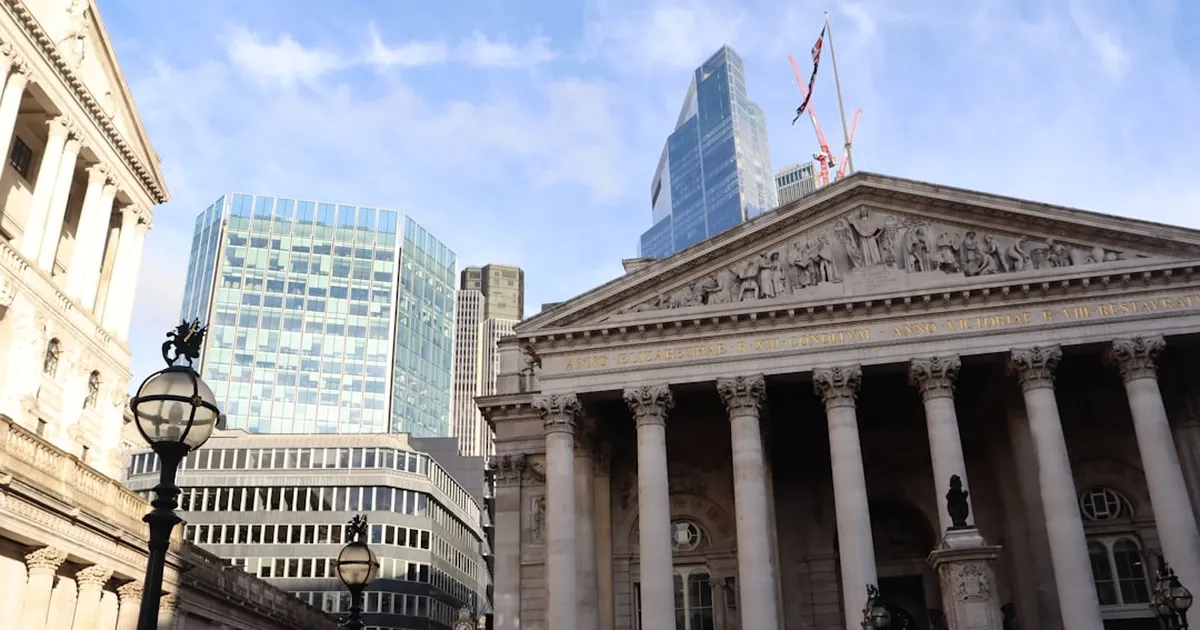
 Photo by Alicja Ziaj on Unsplash
From a fake RingGo parking scam to Andy Burnham's income tax devolution plans and record solar output — here's what today's finance news means for you.
Photo by Alicja Ziaj on Unsplash
It has been a busy Sunday in UK finance news. From a new text message scam targeting parking app users to Andy Burnham's ambitious — and complicated — devolution plans, and a record-breaking month for solar energy that could affect your energy bills, here is everything you need to know and what it means for your money.
Fraudsters are sending convincing text messages pretending to be from RingGo, one of the UK's most widely used parking payment apps, claiming recipients owe unpaid parking fees. The scam works by exploiting the fact that many people use multiple parking apps and may genuinely struggle to remember which one they used on a given occasion. The urgency implied by a threat of enforcement action is designed to make you panic — and click.
The link in these fake messages leads to a bogus website designed to harvest your bank card details. Experts warn that the combination of a familiar brand name, a plausible premise, and the fear of legal or financial consequences makes this a particularly effective lure. If you receive an unexpected text about parking fees owed, do not tap any link in the message. Instead, open your RingGo app directly or visit the official website by typing the address yourself.
Watch out: No legitimate parking operator will demand payment via a link in an unsolicited text message. If you are unsure whether a debt is genuine, contact the company directly using details from their official website — never from the text itself. Report suspicious messages to Action Fraud (actionfraud.police.uk) or forward them to 7726 (the free spam-reporting shortcode).
This scam is a timely reminder that fraudsters increasingly impersonate services we use every day. Parking apps, delivery notifications, and HMRC messages are among the most commonly spoofed. Stay vigilant, and if something feels slightly off — an unexpected message, a slightly odd web address, pressure to act quickly — treat it as a red flag.
Andy Burnham is just two weeks into his tenure as Prime Minister, but his flagship devolution agenda is already taking shape — and it is ambitious. His headline proposal is to hand England's regional mayors a share of income tax revenue, allowing them to fund local economic development directly rather than relying on central government grants. With an autumn Budget pencilled in for late October, the detail-filling begins now.
For everyday consumers, the implications are significant but not yet clear-cut. In theory, giving regional mayors more financial firepower could lead to better local infrastructure, improved public services, and more targeted support for areas that have historically been left behind. Greater Manchester, the West Midlands, and similar city regions could gain more autonomy over how money is raised and spent locally — potentially affecting everything from local transport investment to housing development.
Worth knowing: If income tax devolution is introduced, it is unlikely to mean higher tax bills — the proposal is about sharing existing tax revenue rather than imposing additional levies. However, the precise mechanism, and whether rates could diverge between regions over time, remains to be worked out ahead of the autumn Budget.
The challenge, as analysts point out, is that many local councils are simply not equipped to manage an expanded fiscal role. Years of austerity have hollowed out the capacity of local government, and handing over significant financial responsibilities without rebuilding that capacity first risks creating new inequalities rather than solving old ones. Watch this space — the autumn Budget is shaping up to be a defining moment for how UK public finances are structured for years to come.
Solar energy delivered a record-breaking performance in July, supplying 14.4% of Great Britain's electricity — the highest monthly share ever recorded. Unusually high sunshine levels, with some parts of the UK experiencing almost twice the average sunshine hours for the time of year, drove a surge in output from both large solar farms and domestic rooftop panels. New installation figures also showed a significant uptick in households choosing to go solar.
For homeowners who have already installed solar panels, July will have been a particularly rewarding month — both in terms of energy generated for personal use and, for those with export tariffs, electricity sold back to the grid. For the wider population, a higher share of cheap renewable energy in the mix puts downward pressure on wholesale electricity costs, which feeds through — albeit with a lag — to household energy bills.
Thinking about solar panels? With installation numbers rising and energy prices still a major household concern, more homeowners are exploring solar as a way to cut long-term bills. If you are considering solar and are weighing up how to finance the upfront cost — whether through savings, remortgaging, or equity release — speaking to a qualified financial adviser can help you work out the most cost-effective approach. See our equity release guide or remortgage guide for more.
The surge in solar output also comes against a backdrop of serious drought conditions — half of England was officially declared to be in drought this week for the second consecutive year, with implications for housing development, agriculture, and water costs. Sunshine has been a double-edged sword this summer: great for renewable energy, far less welcome for water reserves.
UK Government Investments (UKGI) — the public body that manages the taxpayer's interest in major organisations including Channel 4 and the Post Office — suffered a data breach that left sensitive management information and the personal contact details of more than 50 government officials publicly accessible for nearly 40 hours. The agency has since been pushed to improve its internal security protocols.
While this particular breach directly affected government officials rather than members of the public, it is a stark reminder that even well-resourced public institutions can fall victim to basic security failures. UKGI oversees taxpayer stakes in some of the UK's most prominent organisations, meaning its internal data can be commercially and politically sensitive. A 40-hour exposure window is a significant lapse.
A wider lesson for consumers: Data breaches at public and private institutions can expose your personal details without you ever knowing. It is good practice to regularly check whether your email address has appeared in known breaches (haveibeenpwned.com is a free and reputable tool), use strong unique passwords for financial accounts, and enable two-factor authentication wherever possible.
Today's stories touch on several areas that matter directly to your finances. Here is what we suggest you do:
For personalised guidance on any of the financial issues raised today — from remortgaging to fund home improvements, to planning ahead of the autumn Budget — Nesto can match you with an FCA-regulated financial adviser at no cost to you.
Get matched with an FCA-regulated adviser in under 2 minutes. Free, no obligation.
Find my adviser — it's free →Trusted by thousands of UK consumers • 5-star rated • 100% free