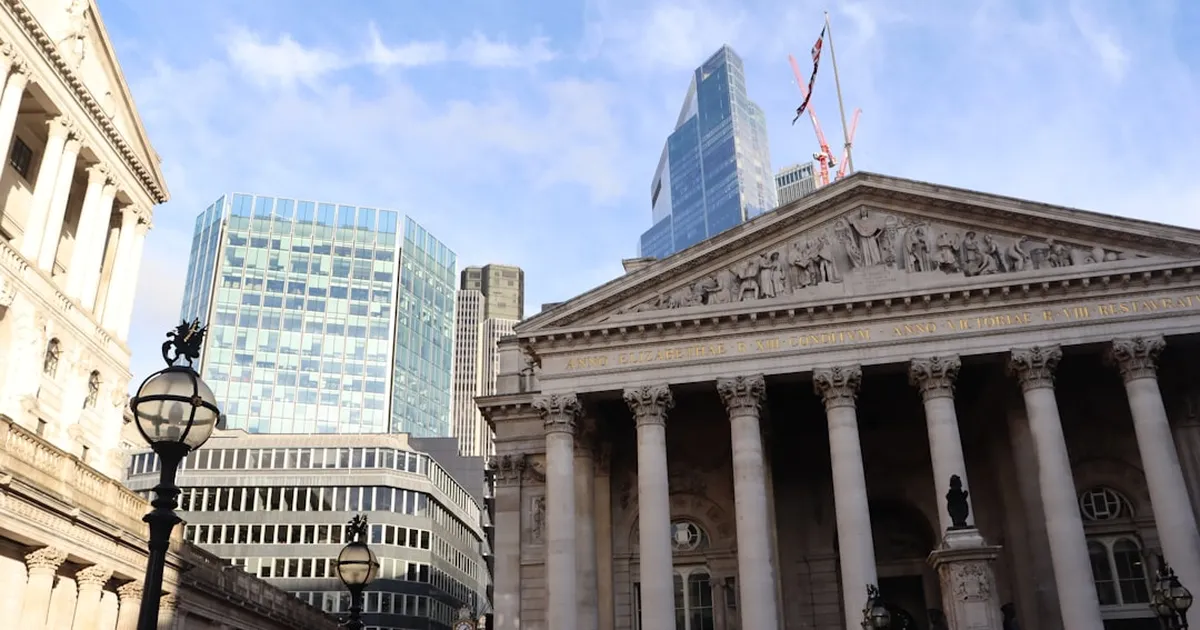
 Photo by Alicja Ziaj on Unsplash
Today's UK finance news: spending limits tightened ahead of October Budget, water firm mutualisation debate, and Booking.com refund battles explained.
Photo by Alicja Ziaj on Unsplash
From a joint memo out of Downing Street putting ministers on notice ahead of October's Budget, to a growing row over what to do with Britain's failing water companies, and a wave of complaints from holiday-makers struggling to get money back from Booking.com — here are the stories that matter most to your finances this Sunday, 2 August 2026.
In an unusual show of unity, Prime Minister and Chancellor issued a joint memo to Cabinet ministers this weekend, warning them to stick to their departmental spending limits as the government prepares for the 28 October Budget. The Chancellor confirmed the Budget will "meet our fiscal rules" and is designed to give families "stability" to plan for the future — language that signals no last-minute giveaways are on the cards.
For everyday consumers, this matters because the tone of a Budget shapes everything from income tax thresholds and National Insurance rates to benefit uplifts and public services. A fiscally tight Budget typically means less room for headline-grabbing tax cuts, but it can also protect the government's borrowing costs — keeping a lid on the interest rates that eventually feed through to your mortgage and savings deals. If the Chancellor is seen to stick to the rules, markets tend to reward that discipline with lower gilt yields, which is generally good news for fixed-rate mortgage pricing.
Planning ahead of the Budget? If you're on a variable-rate or tracker mortgage, now is a sensible time to review your options. See our remortgage guide to understand how to lock in a rate before any post-Budget market movements.
The memo also comes as the government faces pressure on multiple spending fronts — not least the ongoing Thames Water crisis (more on that below). By signalling fiscal discipline early, the Chancellor appears to be managing expectations downward and insulating the government from accusations of reckless borrowing. Whether that discipline will hold once the full spending review lands remains to be seen, but for now the message is clear: don't expect a spending splurge in October.
A group of Labour MPs and metro mayors, many of them close to Greater Manchester Mayor Andy Burnham, have written to the Prime Minister urging a "third way" on water company reform. Rather than full nationalisation — which Treasury modelling suggests could add billions to the national debt — they are proposing that failing firms like Thames Water be converted into not-for-profit mutual co-operatives, putting customers and communities in control without the cost appearing on the government's balance sheet.
For consumers, the stakes are very high. Thames Water alone serves around 16 million customers across London and the South East. Bills have already risen sharply, the company has been dogged by sewage discharge scandals, and its financial position remains precarious. The mutualisation model — similar in principle to how building societies work — would theoretically align the company's incentives with customers rather than shareholders, potentially keeping future bill increases more modest and improving investment in infrastructure.
Watch your water bill: Regardless of how the ownership question is resolved, Ofwat has already approved significant bill increases across the industry through 2030. Households in Thames Water's area should budget for continued above-inflation rises in the short term. Check whether your water bill is included in your rent or paid separately, and factor this into your household budgeting.
The debate is far from settled. Critics of mutualisation point out that co-operatives can still struggle to raise the tens of billions needed for infrastructure investment, and that without access to capital markets on competitive terms, bills could ultimately rise just as steeply. The government has yet to back any single model publicly, but the fact that senior Labour figures are openly floating alternatives to nationalisation suggests the political pressure to act is building — and that a decision may need to come before or alongside the October Budget.
A new investigation by the Guardian has shone a spotlight on a problem many UK travellers will recognise all too well: the nightmare of trying to get money back from Booking.com when a property turns out to be nothing like advertised. In one case, a family arrived at their pre-booked apartment late at night only to be redirected to an entirely different, shabby property — with stained furniture, a stained ceiling, and no sense of safety. Despite raising the issue immediately, they faced a protracted battle to recover their money.
Under UK consumer law, you have strong rights when a product or service is not as described. If you book accommodation through a platform like Booking.com and the property does not match its listing, you are generally entitled to a refund or alternative of equivalent standard. The challenge is that online travel platforms often act as intermediaries, and both the platform and the property owner may try to pass responsibility to the other. The key is to document everything immediately — photograph any issues, note the time, and raise a formal complaint in writing on the same day.
Know your rights before you travel: Section 75 of the Consumer Credit Act means that if you paid for your booking by credit card and it cost between £100 and £30,000, your credit card provider is jointly liable with the retailer. This is one of the strongest consumer protections available and can be a powerful route to a refund when the platform itself is unresponsive. Debit card users can try the chargeback scheme, though this is not a statutory right and success is not guaranteed.
If a platform refuses to engage, your next steps should include escalating to the Alternative Dispute Resolution (ADR) scheme that the company is registered with, or — as a last resort — making a claim through the small claims court (known as the Online Civil Money Claims service in England and Wales). The Financial Ombudsman Service does not cover most travel booking disputes, but if you paid with a credit card and your issuer refuses your Section 75 claim, the Ombudsman can look at your complaint against the card provider. Always keep a paper trail from day one.
In an exclusive interview, Frank Elderson, a member of the European Central Bank's executive board, has said that the climate emergency and the destruction of natural ecosystems now pose a "dramatically growing" risk to the global economy and to financial stability itself. The ECB is stepping up its monitoring of so-called "ecosystem services" — the natural processes (clean water, pollination, flood regulation) that underpin vast swathes of economic activity — and assessing what happens to bank balance sheets and insurance markets if those services collapse.
While this may sound abstract, the financial consequences for UK households are tangible. Wildfires, flooding, and extreme heat events are already pushing up the cost of home and contents insurance in affected areas of Europe — and the same dynamics are increasingly visible in the UK. Flood risk, in particular, is becoming a major factor in both mortgage availability and insurance pricing for properties in certain postcodes. Lenders are quietly tightening criteria for high-risk properties, and some insurers are either pricing cover prohibitively or withdrawing from certain markets altogether.
Own a property in a flood-risk area? Check whether your home is covered by the Flood Re scheme, a government-backed reinsurance pool that helps keep flood insurance affordable for eligible properties. Not all properties qualify — notably, homes built after 2009 are excluded. If you are buying a property, always commission a full flood risk assessment and check the Environment Agency's flood map before exchanging contracts.
For investors and pension savers, the ECB's warning is another reminder that climate-related financial risk is no longer a niche ESG consideration — it is increasingly a mainstream factor affecting asset values, insurance costs, and long-term returns. If you have not reviewed how your pension or investment portfolio is positioned for climate risk, it may be worth discussing this with a financial adviser. See our guide to how pensions work for a primer on understanding what your pension is invested in.
This week's news carries several practical prompts for UK consumers:
If any of today's stories have prompted questions about your own financial situation, Nesto can match you with an FCA-regulated financial adviser who can give you personalised guidance — at no obligation.
Get matched with an FCA-regulated adviser in under 2 minutes. Free, no obligation.
Find my adviser — it's free →Trusted by thousands of UK consumers • 5-star rated • 100% free