 Photo by POURIA 🦋 on Unsplash
UK borrowing costs hit a 19-year high, Healey meets retail bosses ahead of the budget, and two major supermarkets could vanish. Here's what it means for you.
It has been a turbulent week for UK finances, with government borrowing costs surging to levels not seen since 2007, retailers bracing for a tough budget, and the supermarket sector facing its biggest shake-up in years. Here is what yesterday's biggest stories mean for your money.
The Bank of England governor, Andrew Bailey, issued a stark warning to Chancellor John Healey on Thursday: whatever the government decides at the upcoming budget, it must be seen as credible by financial markets — or face the consequences. This comes after the UK's medium-term borrowing costs reached a fresh 19-year high, with investors selling off government bonds (known as gilts) that are usually considered safe havens. The sell-off is being driven by fears of rising inflation and a lack of confidence in the government's fiscal plan.
For everyday consumers, rising government borrowing costs are not an abstract City concern. When the government has to pay more to borrow, it puts upward pressure on the interest rates that banks charge each other — and ultimately on the rates you pay for mortgages, loans, and credit cards. The last time borrowing costs were this high was in the run-up to the 2008 financial crisis, and many homeowners on variable or tracker rate mortgages could start to feel a squeeze if the situation worsens.
Watch out: If you are on a tracker or standard variable rate mortgage, rising gilt yields can translate into higher monthly payments. Even fixed-rate mortgage holders approaching renewal should act promptly — rates may not fall as quickly as hoped if bond market pressure persists. See our remortgage guide for your options.
Bailey's intervention is a direct message to Healey that market confidence must come first. With the budget expected in the coming weeks, the chancellor faces a delicate balancing act: spending enough to meet public service demands without spooking the bond markets that fund the national debt. The outcome will shape the interest rate environment for months — if not years — to come. If you have been sitting on the fence about fixing your mortgage rate, now is a good time to get independent advice.
Chancellor John Healey called in the chief executives of some of Britain's biggest high street names this week for pre-budget talks. The meetings follow mounting concern among retailers and hospitality businesses that the budget could include a fresh raid on business rates — the property tax that shops, restaurants, pubs, and hotels pay regardless of whether they are making a profit. Many in the industry warn that further increases could push already-stretched businesses over the edge.
For consumers, the stakes are higher than they might appear. Business rates are one of the biggest cost pressures facing high street retailers, and increases are frequently passed on through higher prices or — in the worst cases — store closures and job losses. In an environment where inflation is already a concern, a business rates hike could add to the cost-of-living pressure many households are still navigating. The hospitality sector, which employs millions of people across the UK, is particularly exposed.
Good to know: The fact that Healey is meeting industry bosses before the budget suggests the Treasury is at least listening to concerns. Pre-budget consultations sometimes result in softer measures or phased-in changes. Keep an eye on announcements in the coming weeks — any changes to business rates relief will affect prices across shops, pubs, and restaurants near you.
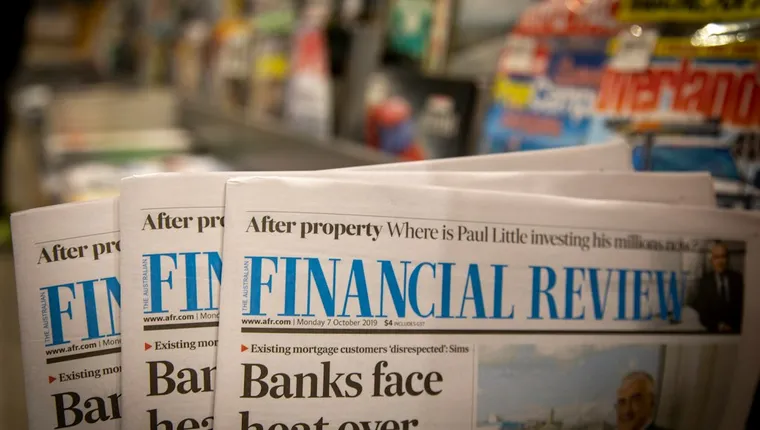
A wave of consolidation could be coming to Britain's supermarket sector. It emerged this week that Sainsbury's and Morrisons — the UK's second- and sixth-largest supermarket chains — held merger talks between last November and February, before Sainsbury's decided to walk away. Industry analysts say the talks are a sign of a broader shakeup, with the suggestion that either Asda or Morrisons — or possibly both — could disappear as standalone brands within a decade. Together, those two brands represent 188 years of British retail history.
The pressure is coming from multiple directions. Discount retailers Aldi and Lidl have continued to take market share from the established 'big four', while Tesco — which this week lifted its profit forecast and reported that shoppers are proving resilient — appears to be strengthening its dominant position. That leaves mid-tier players like Asda and Morrisons caught in a difficult middle ground: too expensive to compete with the discounters, and less premium than Waitrose or Marks & Spencer.
For consumers, fewer supermarket competitors almost always means less price competition and less choice. The Competition and Markets Authority (CMA) would scrutinise any major merger carefully — as it did when it blocked the Sainsbury's-Asda deal in 2019 — but if consolidation does occur through administration or a gradual wind-down rather than a formal merger, regulatory oversight may be more limited. It is worth keeping a close eye on where your local stores are and considering your options if a trusted brand begins to scale back.
Watch out: If supermarket consolidation reduces competition in your area, prices on staple goods could creep up over time. Building a habit of comparing prices across retailers — including online — is one of the easiest ways to protect your household budget.
In a story that is likely to raise eyebrows across the UK, the top 20 executives at Goldman Sachs are reportedly set to share a bonus pool worth up to $500 million (approximately £378 million), with chief executive David Solomon alone due to receive around $100 million (£75.6 million). The payout, described as one of the largest in the bank's history, is made up primarily of Goldman Sachs stock rather than cash.
While this story is centred on a Wall Street bank, it is a useful reminder of the vast gulf between pay at the top of the financial industry and the experience of most UK households — particularly at a time when borrowing costs are rising and public services are under strain. For investors who hold funds with exposure to Goldman Sachs or US financial stocks, strong bank profits and bonuses can signal healthy financial markets, which may be a modest positive for pension funds and investment portfolios. However, it also highlights why scrutiny of financial sector pay remains a live political issue on both sides of the Atlantic.
This week's news paints a picture of an economy under genuine pressure — from bond markets to the high street — with the upcoming budget likely to be one of the most consequential in years. Here is what we recommend you focus on right now:
If you are unsure how any of these developments affect your personal situation, a qualified financial adviser can help you make sense of the noise. Nesto matches you with FCA-regulated advisers who can give you tailored guidance — at no obligation.
Get matched with an FCA-regulated adviser in under 2 minutes. Free, no obligation.
Find my adviser — it's free →Trusted by thousands of UK consumers • 5-star rated • 100% free